


Batger & Co
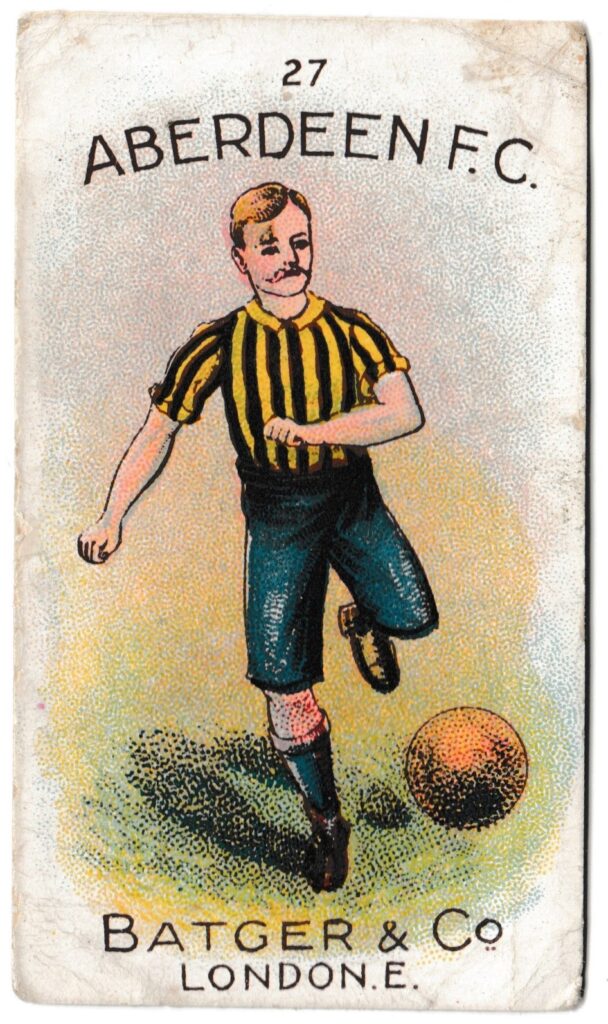
The origins of the firm are somewhat sketchy, but records indicate that the Batger were a German family with a background in sugar refining, some of whom moved to Britain in the early 1700’s. From there, a Miss Elizabeth Batger was reportedly the founder of Batger & Co in 1748 for the business of producing sweetmeats, and was based in Stepney, East London.
Batger & Co grew significantly over the following years, such that by 1850 it occupied a four storey factory at 15-16 Bishopsgate Street (now known simply as Bishopsgate) in East London, a site which has records of being the premises of the grocery business of John Batger from 1783 (and possibly earlier). For those with an interest in history, Bishopgate was one of the Eastern Gates to the walls of London, having been built in Roman times to defend the city against would be attackers. In the 1700’s it was common for the gates to be adorned with the heads of criminals mounted on spikes as a warning to others who may stray from the laws of the day.
In 1856 Batger & Co was acquired by Samuel Hanson and Son, a wholesale grocer of Botolph Lane, Eastcheap, London, and was then run by Samuel Hanson and Frederick Machin. In 1867 the company moved from its Bishopsgate home, heading to Cable Street in East London, where a manufacturing base covering three acres was built.
The company expanded its range to include Christmas Crackers in 1872, with “Harlequin” crackers being their first foray into the market. From here the company grew rapidly, to the point that by 1900 the company was employing nearly 1,000 people, with double that number during peak seasons, claiming to be the biggest single employer in East London.
During WWI Batger were contracted to supply Jam to the British Army, though reports suggest that some of the flavours on offer were not the most popular. What does appear to have happened though is that the empty jam cans were converted into improvised explosives to be thrown into the enemy trenches, as can be seen in the image XX.
In 1922 Batger & Co was bought by Crosse & Blackwell, though the company was quickly divested when Crosse & Blackwell realised it did not properly fit their business, and was subsequently run by Stanley Machin, a descendant of the Frederick Machin mentioned earlier. Stanley Machin died in 1939, at which point his son Harold Stanley Machin stepped in to take the reins.
During the devastating WWII bombing raids on East London, the East London factories were totally destroyed, which saw the company move to a somewhat safer location at 44 Southside, Clapham, where they remained until the company was sold to Needlers of Hull in 1970, with production relocated to Hull a year later.
The Batger & Co. brand finally disappeared in 2000, signalling the end of production of the company’s longest running and most popular product, “Chinese Figs”. Other notable and exciting sounding prodcts produced during the life of the company included “Nebula Lemon Squash”, “Lime Fruit Marmalade”, “Buttered Almonds”, “Jersey Caramels” and “Television Cracker”s.
If you have additional information on Batger & Co please do get in touch as we would love to know more about this fascinating company and its history.
“Well Known Football Clubs” (c1910) – 30 Cards
According to the rear of the cards, there were 30 cards in the set, but as of 30 Dec 2021 only 18 are known, so it may be that the other 12 were never issued, or that they have not survived. The cards were designed to be redeemed for the confectionery produced by Batger & Co at the time of their issue, so it is possible that redeemed cards were often destroyed, though most of those which are known have a “Cancelled” stamp across the back, or one of the corners clipped off, so redeemed cards did definitely make it back into circulation. If you have any of these cards and are happy to share images, then I will happily add to this page with appropriate credits. We are also happy to buy any cards you might wish to sell.

#1. ???
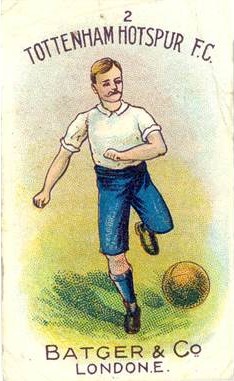
#2. Tottenham Hotspur
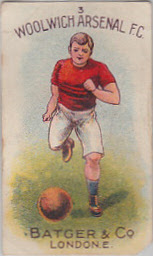
#3. Woolwich Arsenal
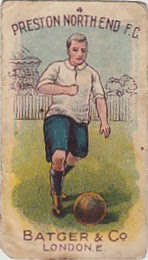
#4. Preston North End
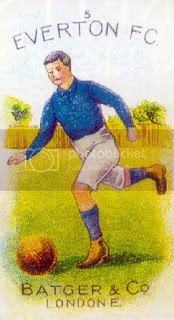
#5. Everton
#6. ???
#7. ???
#8. ???
#9. ???
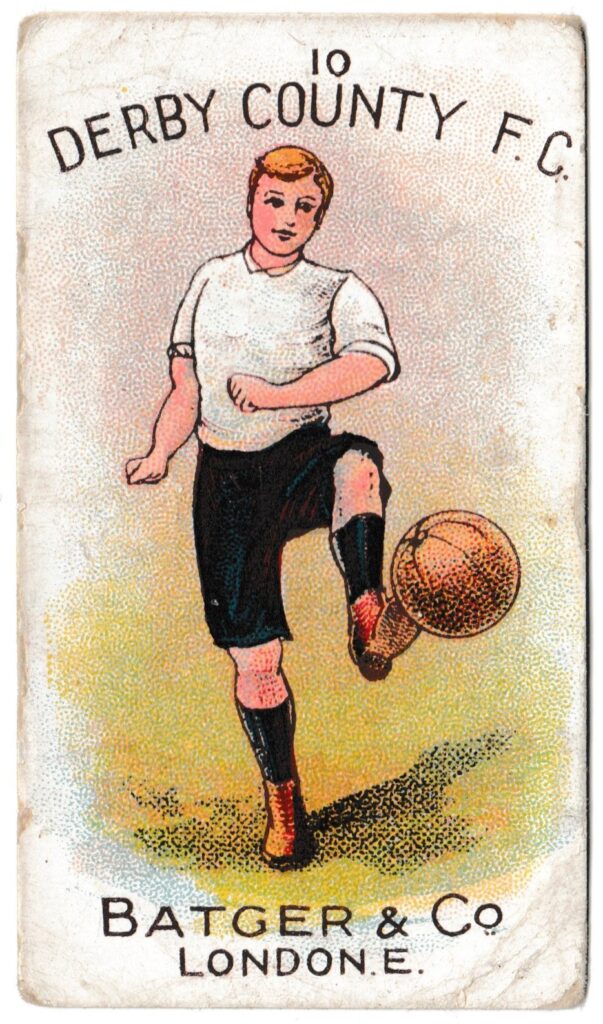
#10. Derby County
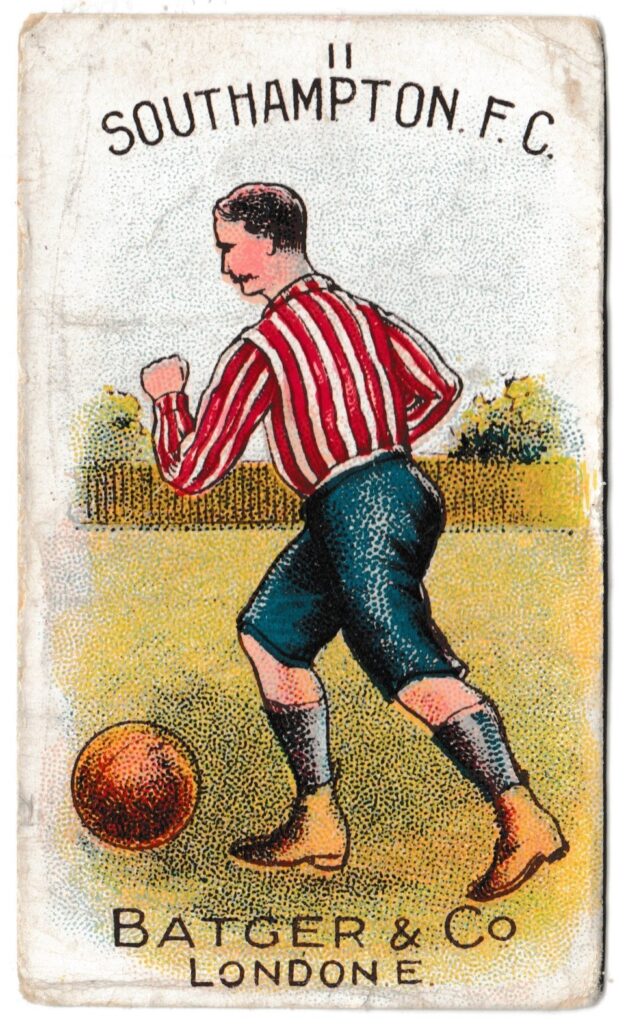
#11. Southampton
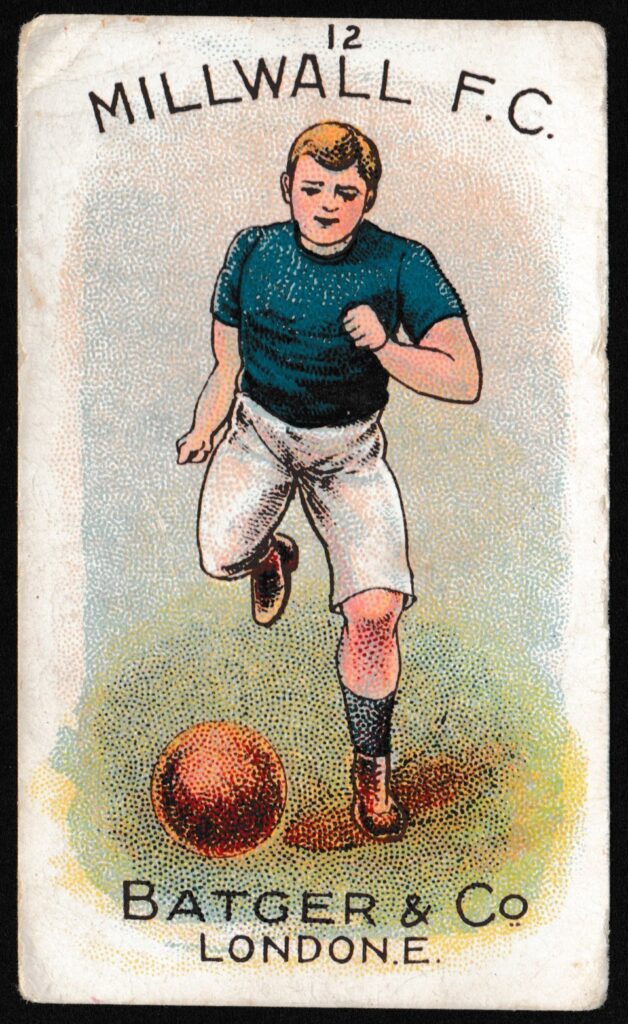
#12. Millwall
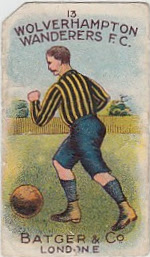
#13. Wolverhampton Wanderers
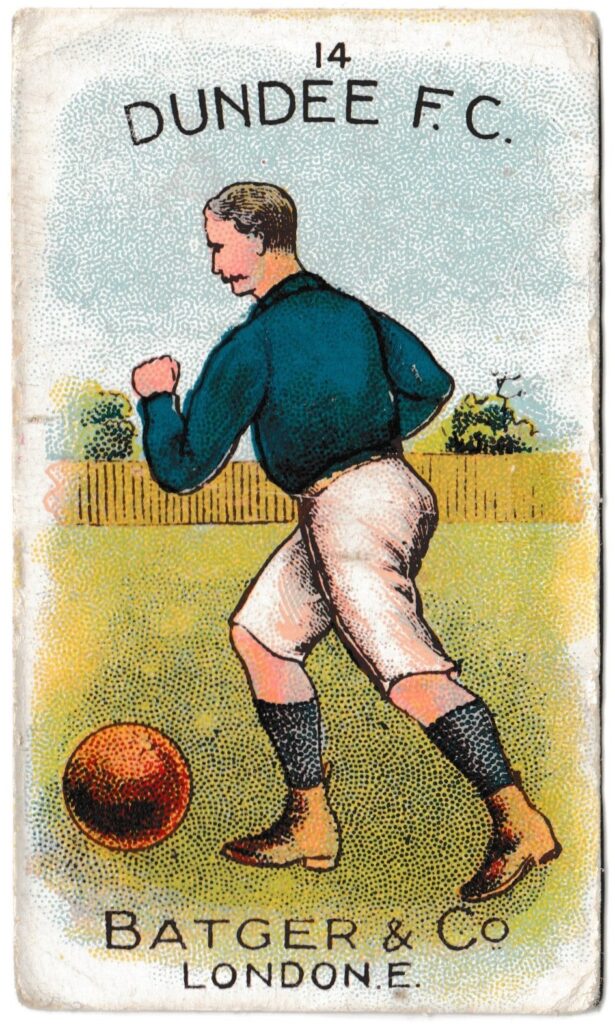
#14. Dundee
#15. ???
#16. Glasgow Celtic
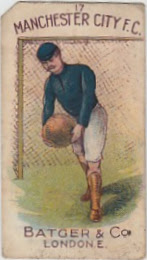
#17. Manchester City
#18. ???
#19. ???
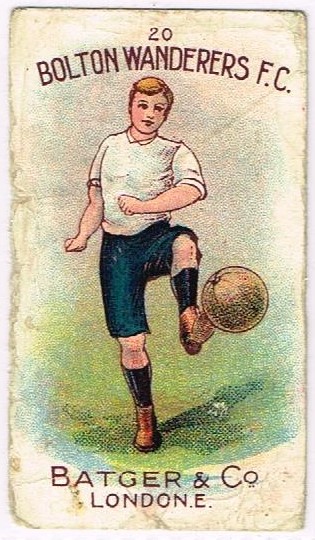
#20. Bolton Wanderers
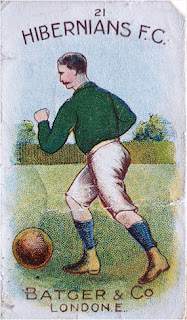
#21. Hibernian
#22. ???
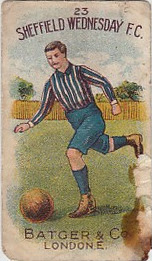
#23. Sheffield Wednesday
#24. ???
#25. ???
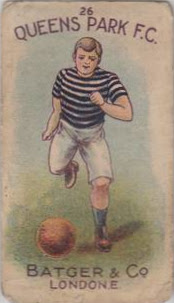
#26. Queens Park
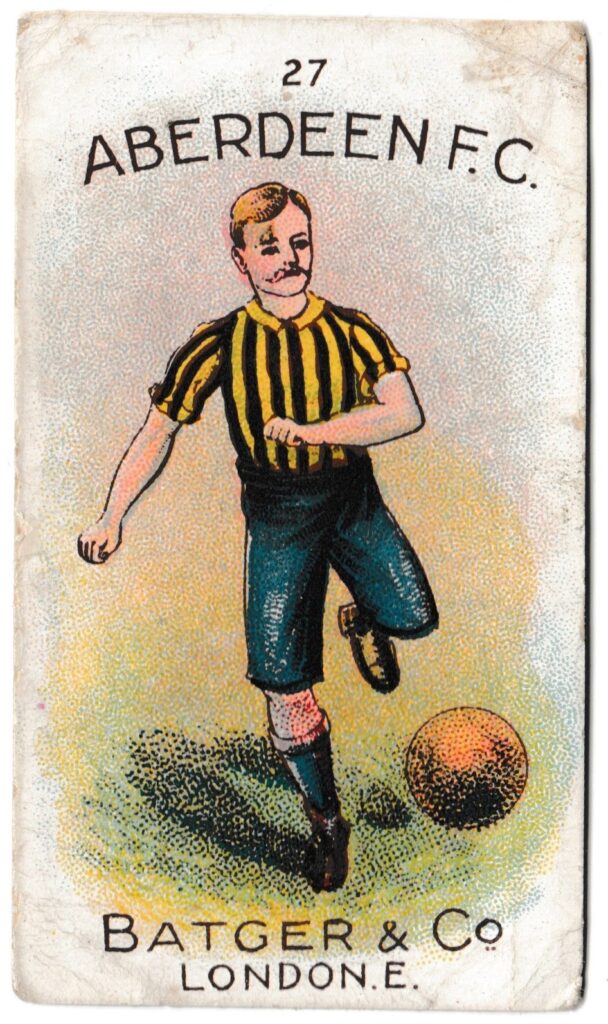
#27. Aberdeen
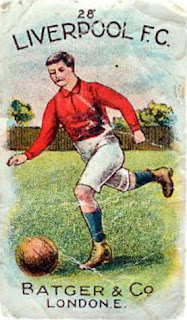
#28. Liverpool
#29. ???
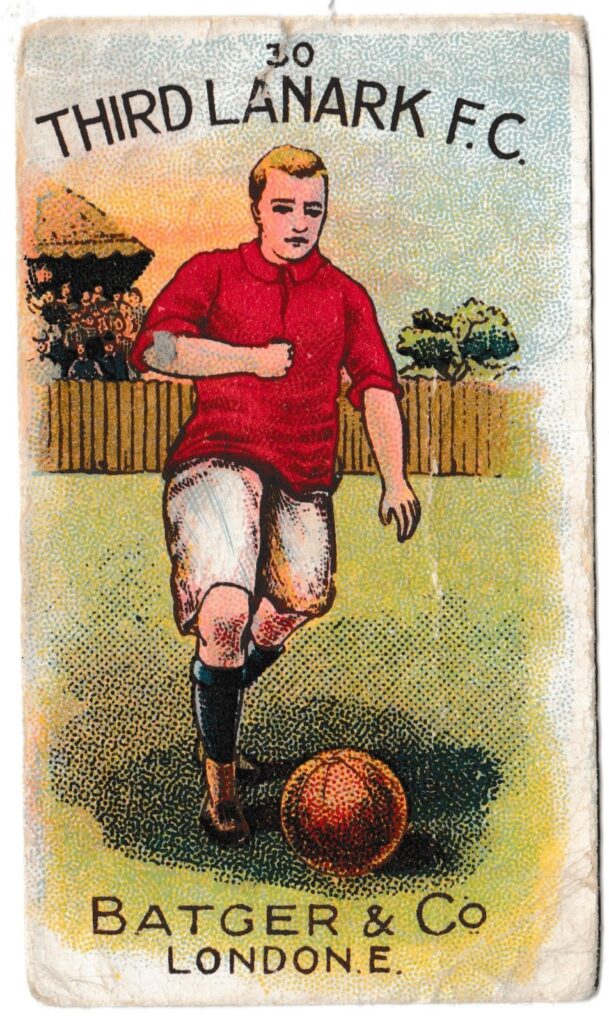
#30. Third Lanark
If you have any snippets of info or images related to the above producer of cards, or any cards/ephemera you wish to sell, please do get in touch and we will publish and credit anything of interest.